Independent checks for new build buyers
Professional Snagging Survey London
Know what needs attention before small defects are forgotten. Get a Free Estimate
Independent checks for new build buyers
Know what needs attention before small defects are forgotten. Get a Free Estimate
A snagging survey gives you time to look beyond fresh paint and a newly fitted kitchen and concentrate on whether the property has actually been finished to an acceptable standard. During a London snagging inspection, we work through the accessible parts of the home methodically, looking for visible defects, damage, unfinished details and elements that do not appear to operate as intended.
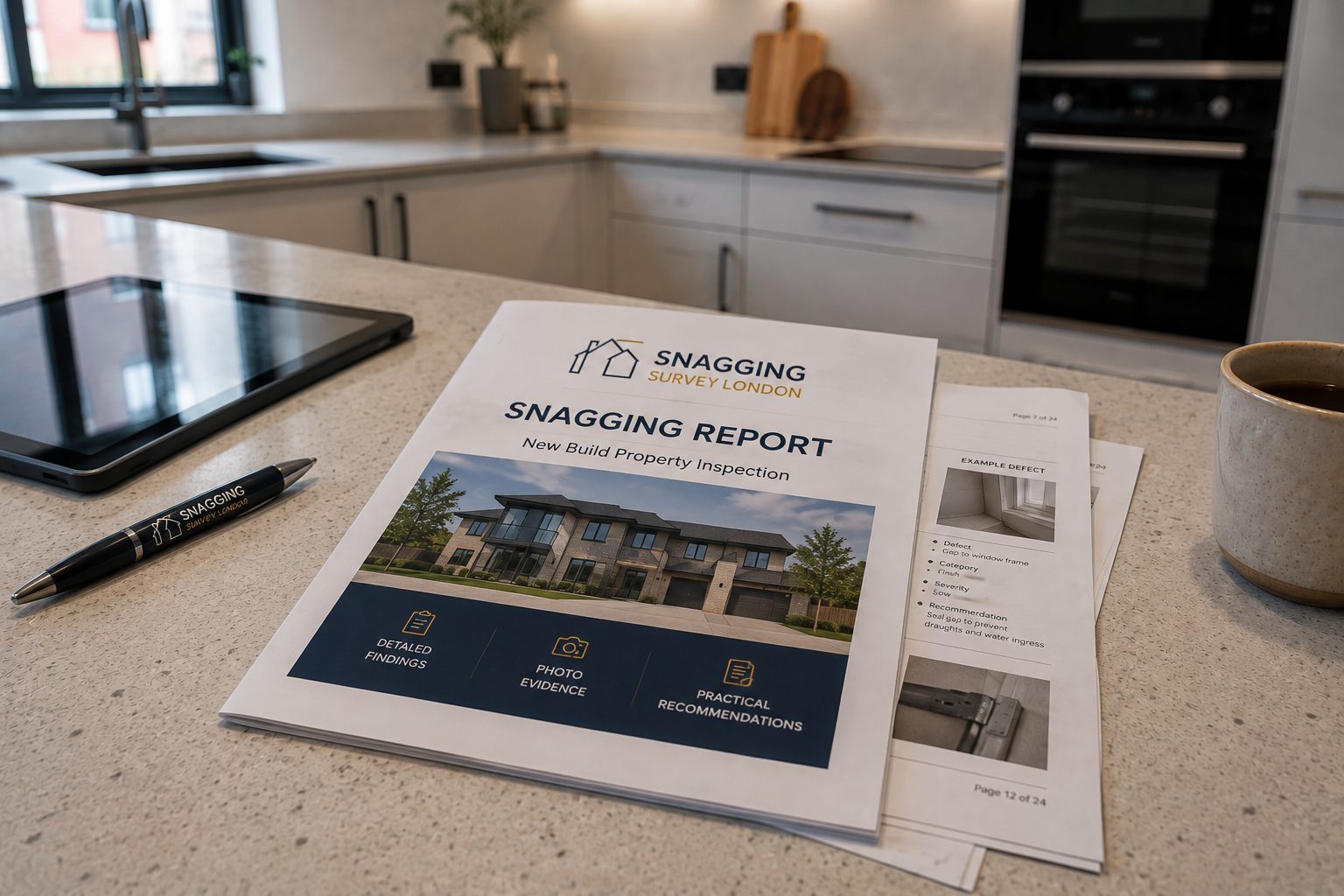
The goal is not to make a new home look problematic. It is to separate the excitement of handover from the practical job of checking the finish. A clear snagging report gives you a written record of the issues identified and a more organised way to raise those points with the developer.
Every new build is different, but our inspection follows a consistent practical approach. We look closely at the visible quality and operation of accessible elements throughout the property, moving room by room so smaller defects are less likely to be overlooked.
We look for obvious paint defects, poor filling, cracking, marks, uneven finishes and areas that appear incomplete or damaged. Decorative defects can seem minor individually, but they quickly become noticeable once furniture and normal lighting are introduced.
Internal doors, cupboard fronts, trims and accessible joinery are checked visually and, where appropriate, for normal operation. Misalignment, rubbing doors, damaged edges and poorly finished trim are common examples of snagging items.
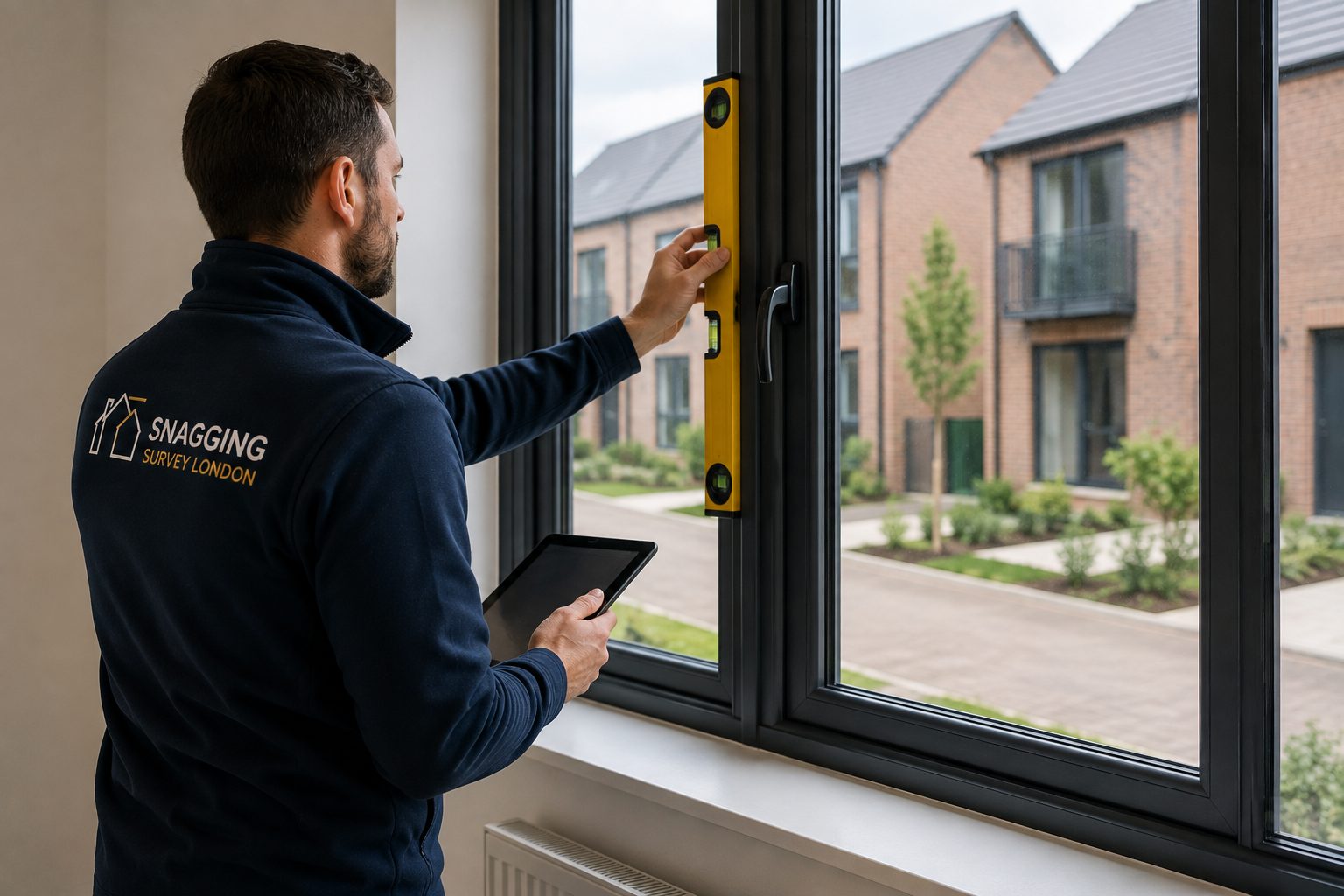
Accessible windows are checked for obvious defects, damage and operation, with attention to visible seals and finishing around frames. Issues around new windows can affect both appearance and day-to-day use.
We review accessible fitted cabinetry, worktops, doors, drawers and visible finishing details. Chips, scratches, alignment issues and incomplete sealant can all be worth recording before the property settles into normal use.
Bathrooms are examined for visible finishing defects around sanitary fittings, tiles, grout, sealant and accessible fixtures. Poor finishing in wet areas is especially worth identifying early so concerns can be raised promptly.
We also look for the smaller inconsistencies that make a new home feel unfinished, including damaged surfaces, loose-looking fittings, incomplete edges and visible areas that appear to need remedial attention.
| Service | Estimated Cost | Average |
|---|---|---|
| One-bedroom new build flat | £250–£350 | About £300 |
| Two-bedroom new build flat | £300–£400 | About £350 |
| Three-bedroom property | £350–£475 | About £410 |
| Larger new build house | £425–£650+ | About £525 |
These are general planning ranges rather than fixed quotations. Property size, layout, location, access arrangements and inspection requirements can affect the final price.
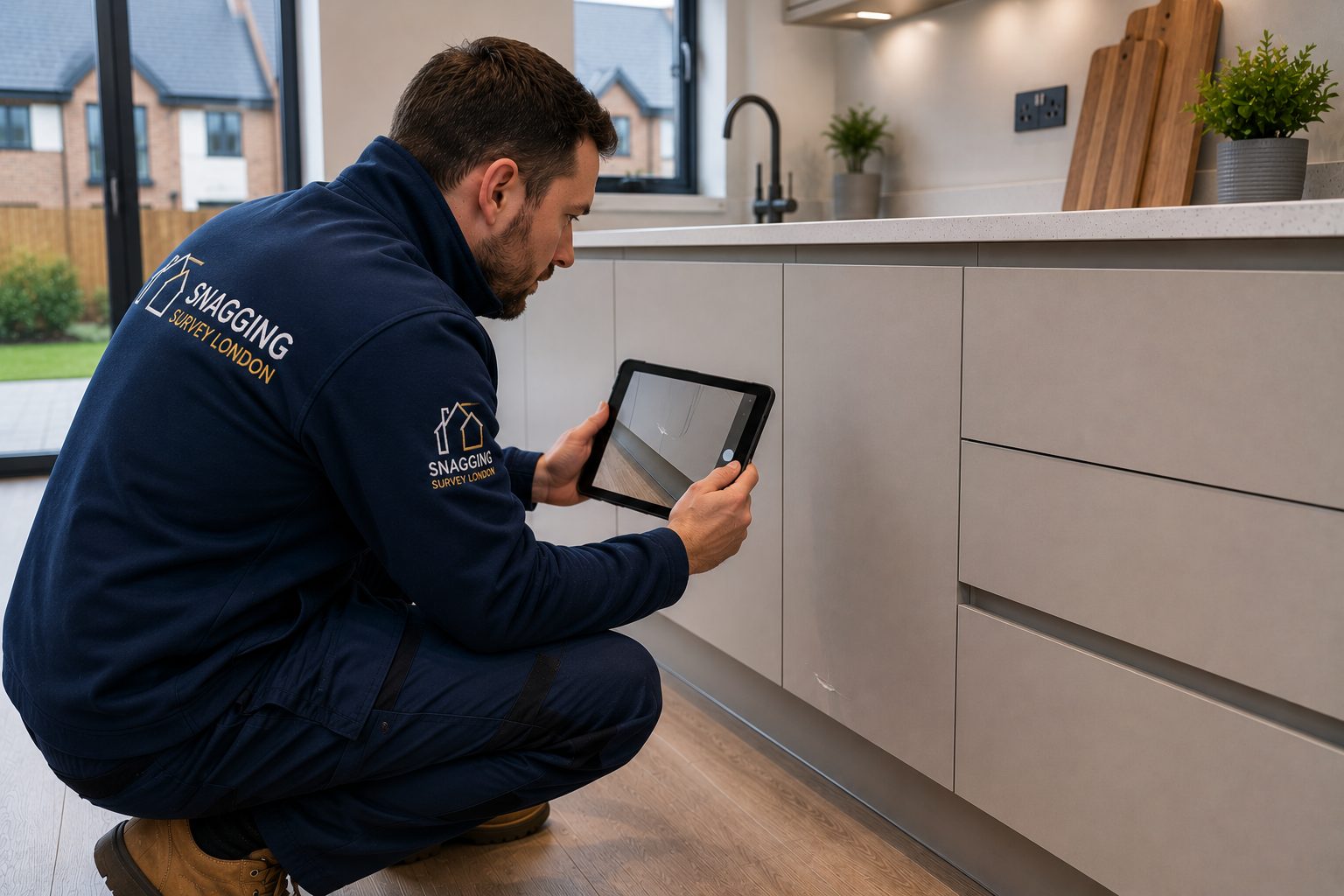
We work through the property systematically so the inspection is not reduced to a quick visual walk-through.
Findings are written to help you understand what the issue is and where it was identified.
Our work covers the mix of flats, houses, regeneration schemes and high-density developments found across London.
We attend with the buyer or homeowner's interests in mind rather than representing the developer.
Tell us about your new build and when you expect access.
No obligation to proceed.
Send the location, property type, approximate size and expected completion or access date so we can understand what you need.
We agree a suitable inspection time based on access permitted by you or the developer.
The accessible property is checked methodically for visible defects, incomplete finishes and practical snagging issues.
We organise the findings into a clear snagging report for you to review and use when discussing remedial items.
You can use the report as a structured record when communicating the relevant snagging points to the developer or contractor.